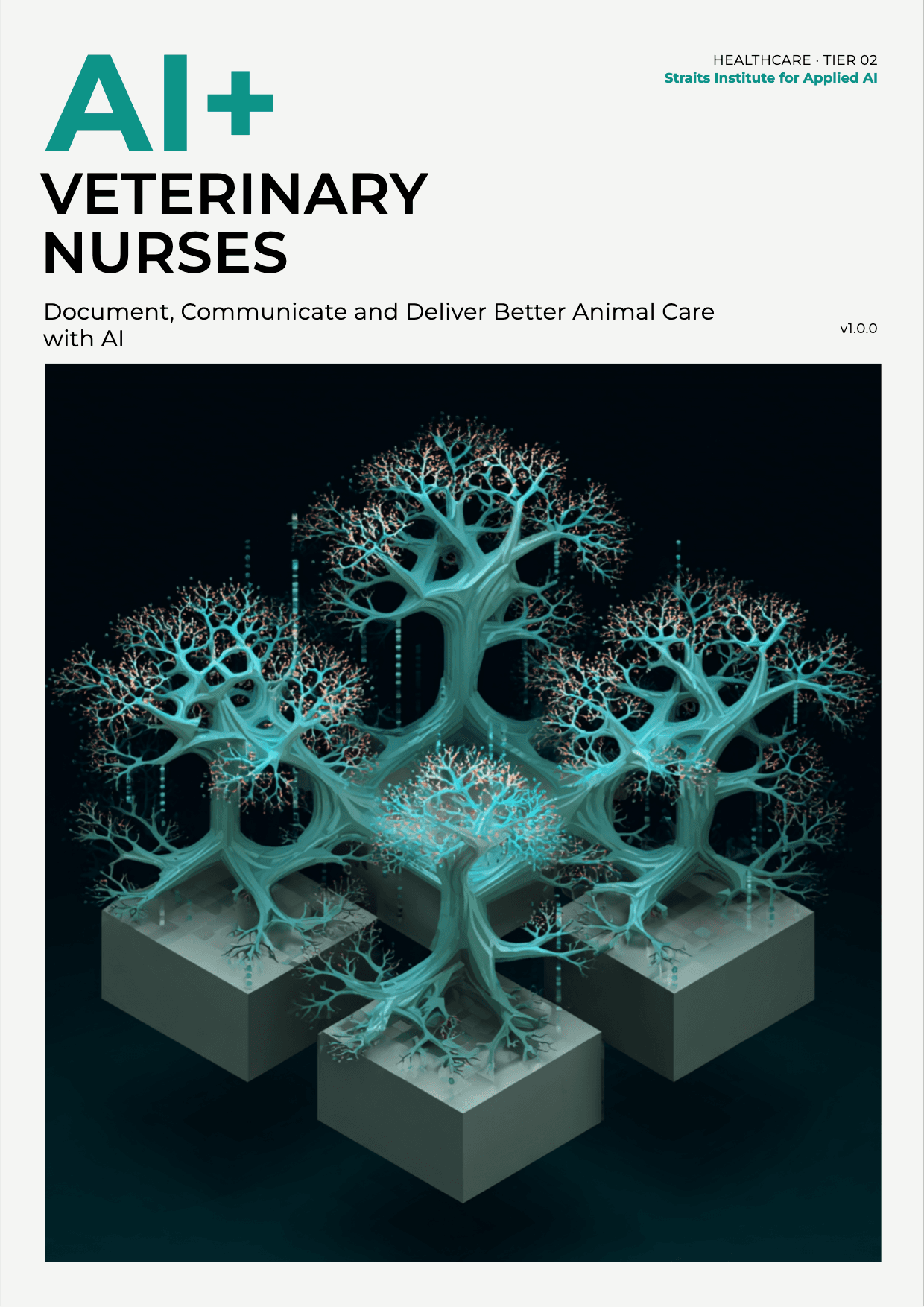
AI+ Veterinary Nurses
Document, Communicate and Deliver Better Animal Care with AI
The AI Guide Written for Nurses — Not Vets
You trained to care for animals — not to spend half your shift writing. *AI+ Veterinary Nurses* gives every RVN and veterinary technician a structured toolkit for using AI safely and effectively in clinical nursing practice: the PAWS Protocol for data governance and scope-of-practice boundaries, the NURSE Framework across five nursing domains, and 36 prompt templates covering nursing records, anaesthesia documentation, discharge instructions, nurse-led clinics, and CPD. Includes a three-track 90-day adoption plan. Built by an AI engineering firm for nurses who give everything to their patients — and deserve tools that give something back.
- 36 prompt templates covering nursing care records, anaesthesia monitoring summaries, discharge instructions, and CPD documentation
- The NURSE Framework — the first AI workflow map built for veterinary nursing, not repurposed from a vet's consultation model
- The PAWS Protocol applied to your nursing scope, with a clear boundary map for what's yours and what needs the vet
- A nurse-led clinics toolkit — weight management, dental health, senior wellness, and preventive care materials in half the time
- A three-track 90-day adoption plan for companion animal, emergency/referral, and large animal nursing contexts
A registered veterinary nurse (UK: RVN) or veterinary technician (US: CVT/LVT/RVT) in clinical practice — at any career stage from newly qualified to senior nurse or nursing team lead. Working in companion animal practice, referral/emergency hospital, or mixed/farm/equine practice. Registered with their national regulatory body (RCVS, NAVTA, or equivalent).
Also for:Student veterinary nurses in their final year of training; head nurses and practice managers in veterinary settings responsible for nursing protocols and team CPD; veterinary practices looking to build an AI-ready nursing team.
- Apply the PAWS Protocol to evaluate any AI tool before use with animal patient records, client data, or clinical records
- Use the NURSE Framework to identify and apply AI across the five core areas of veterinary nursing: nursing records, team communication, professional growth, screening and triage, and client education
- Generate AI-assisted nursing care records, anaesthesia monitoring notes, and patient handover summaries using PRISM-structured prompts
- Design and deliver nurse-led client education sessions and discharge instructions using AI assistance
- Build and execute a 90-day AI adoption plan calibrated to their clinical context and career stage
- Diagnostic
- How AI-ready is your veterinary nursing practice?
- Chapter 1
- AI in Veterinary Nursing Right Now
- Chapter 2
- PAWS in Practice: AI Safety for Veterinary Nurses
- Chapter 3
- The NURSE Framework: AI Across Your Clinical Day
- Chapter 4
- Nursing Care Records and Patient Monitoring
- Chapter 5
- Triage, Intake, and Client Communication
- Chapter 6
- Nurse-Led Clinics and Preventive Healthcare
- Chapter 7
- Anaesthesia and Surgical Nursing
- Chapter 8
- Team Communication and Practice Coordination
- Chapter 9
- CPD, Evidence-Based Practice, and Professional Growth
- Chapter 10
- Your 90-Day Veterinary Nursing AI Plan
- Back matter
- Skill Summary · Recommended Next Reads · Glossary · Tool Reference
Built by an AI engineering firm for nurses who give everything to their patients — and deserve tools that give something back.